The Story of 190 South LaSalle
A Century on LaSalle
A hundred and fifty years of Chicago, one era at a time, up to the room you can stand in today.
Begin the Story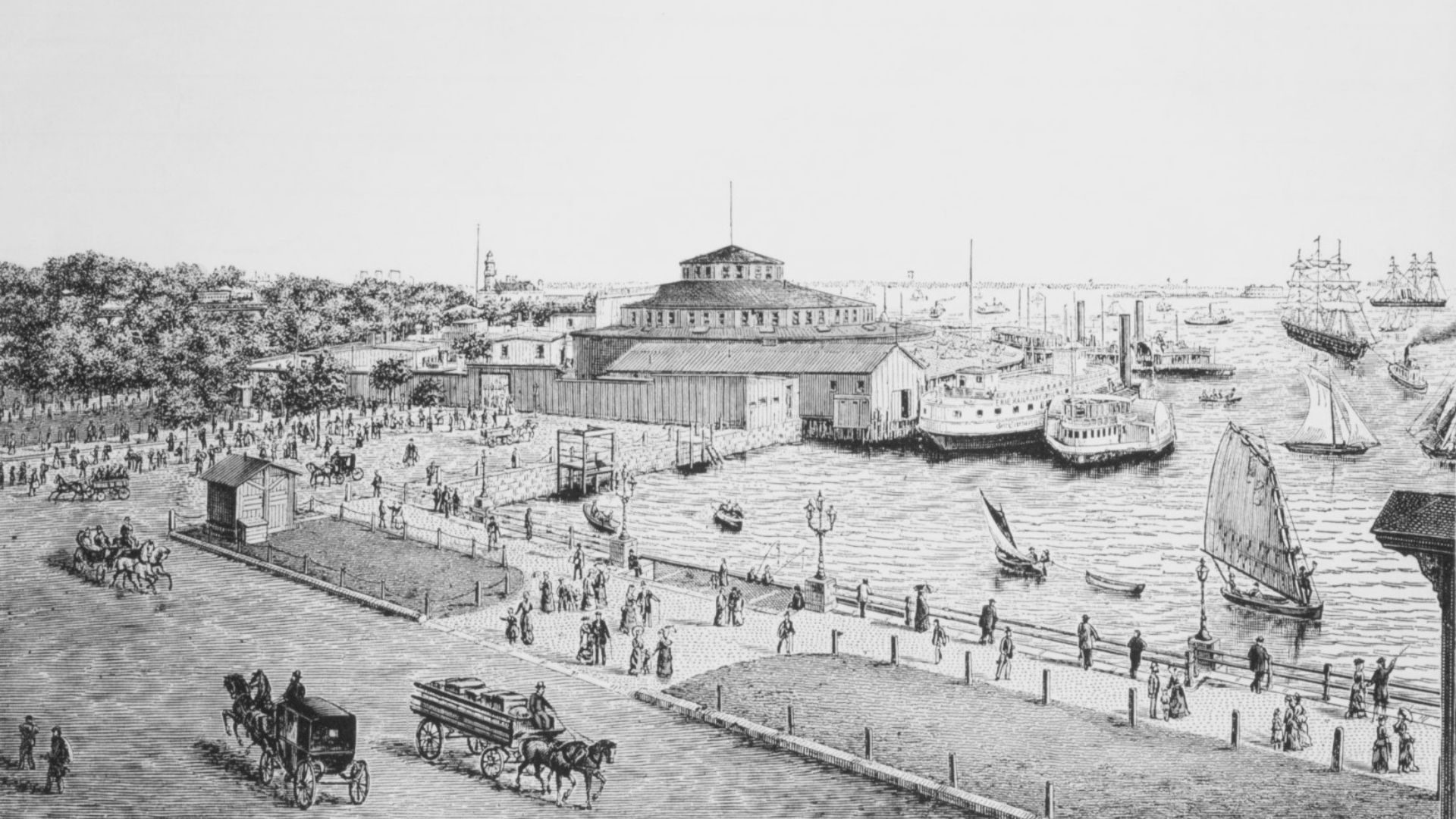
1830–1871
A Street Rises from the Swamp
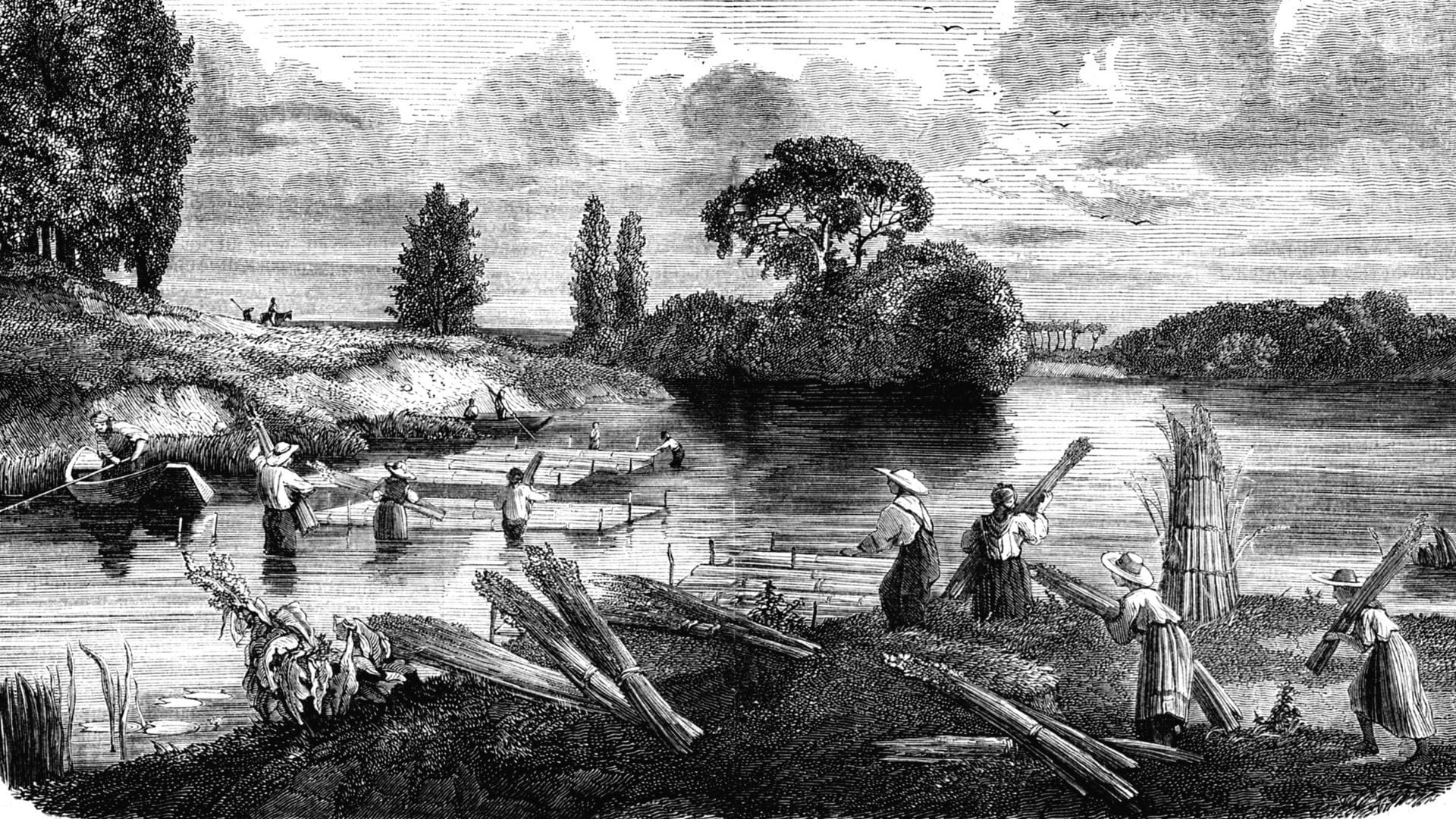
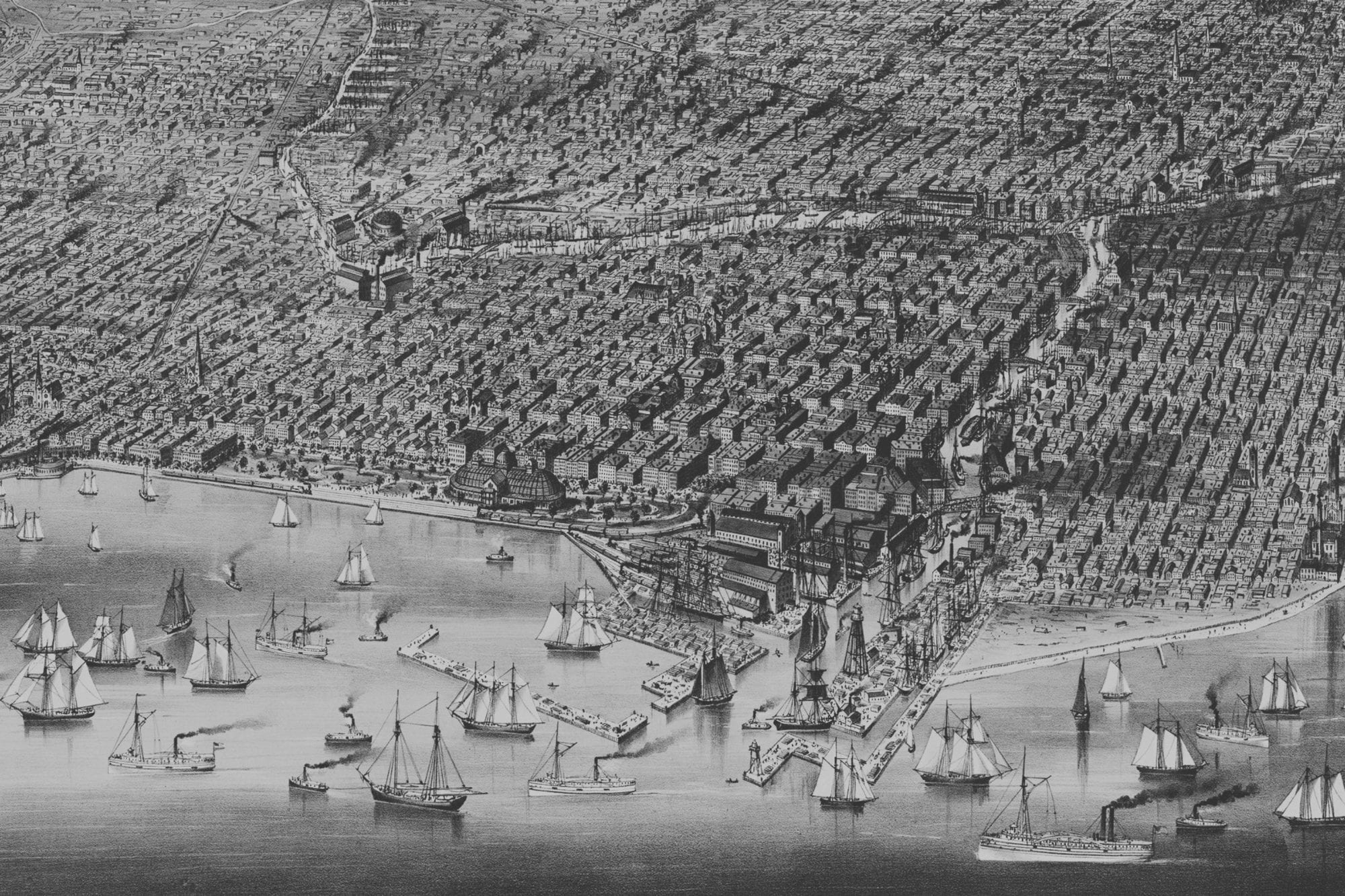
Before the canyon of banks, before the bronze doors and the marble, LaSalle Street was mud. Chicago in the 1830s was a speculation more than a city, a few thousand people betting that a swampy portage between the Great Lakes and the Mississippi basin would become the crossroads of a continent. They were right faster than anyone expected.
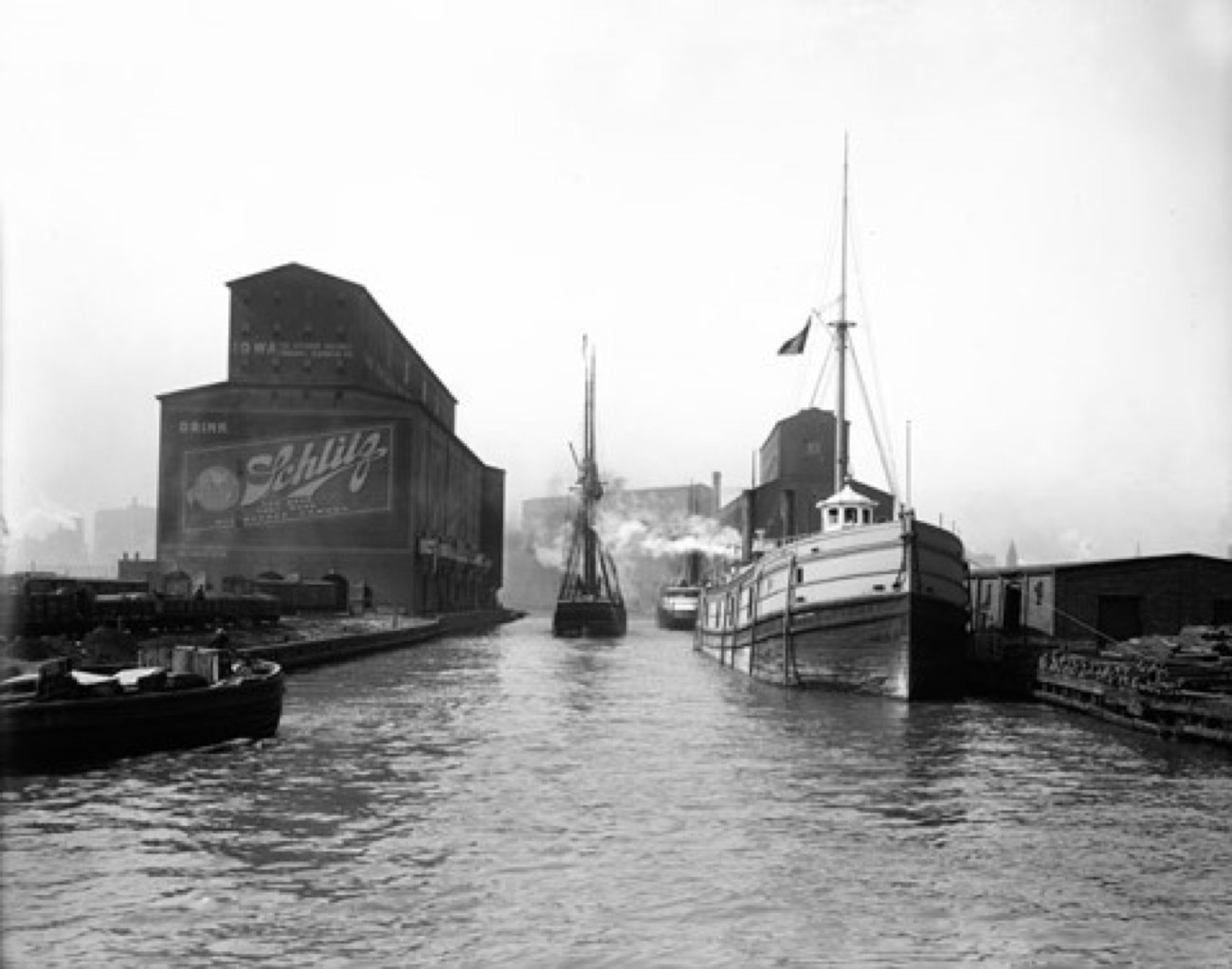
The street took its name from the French explorer René-Robert Cavelier, Sieur de La Salle, who had paddled through the region a century and a half earlier looking for a route to the Gulf. By the 1850s the route he imagined existed in iron and water. Grain elevators shouldered up along the river; schooners and steamers stacked three deep at the docks; and Chicago was suddenly moving more grain than any city on earth.
LaSalle Street found its calling early. The Chicago Board of Trade organized in 1848, the year the canal opened, and the financiers clustered near it. A pattern was set that would hold for the next century and a half: this street would be where Chicago kept its ledgers.
1871–1893
Fire, and the Answer
On an October night in 1871, all of it burned. The Great Chicago Fire took the business district down to ash and foundation stone in about thirty hours, and LaSalle Street went with it. What happened next is the part of the story Chicago still tells about itself: the city rebuilt at a sprint, and then it rebuilt again, higher, because the architects who came to Chicago after the fire were busy inventing the skyscraper.
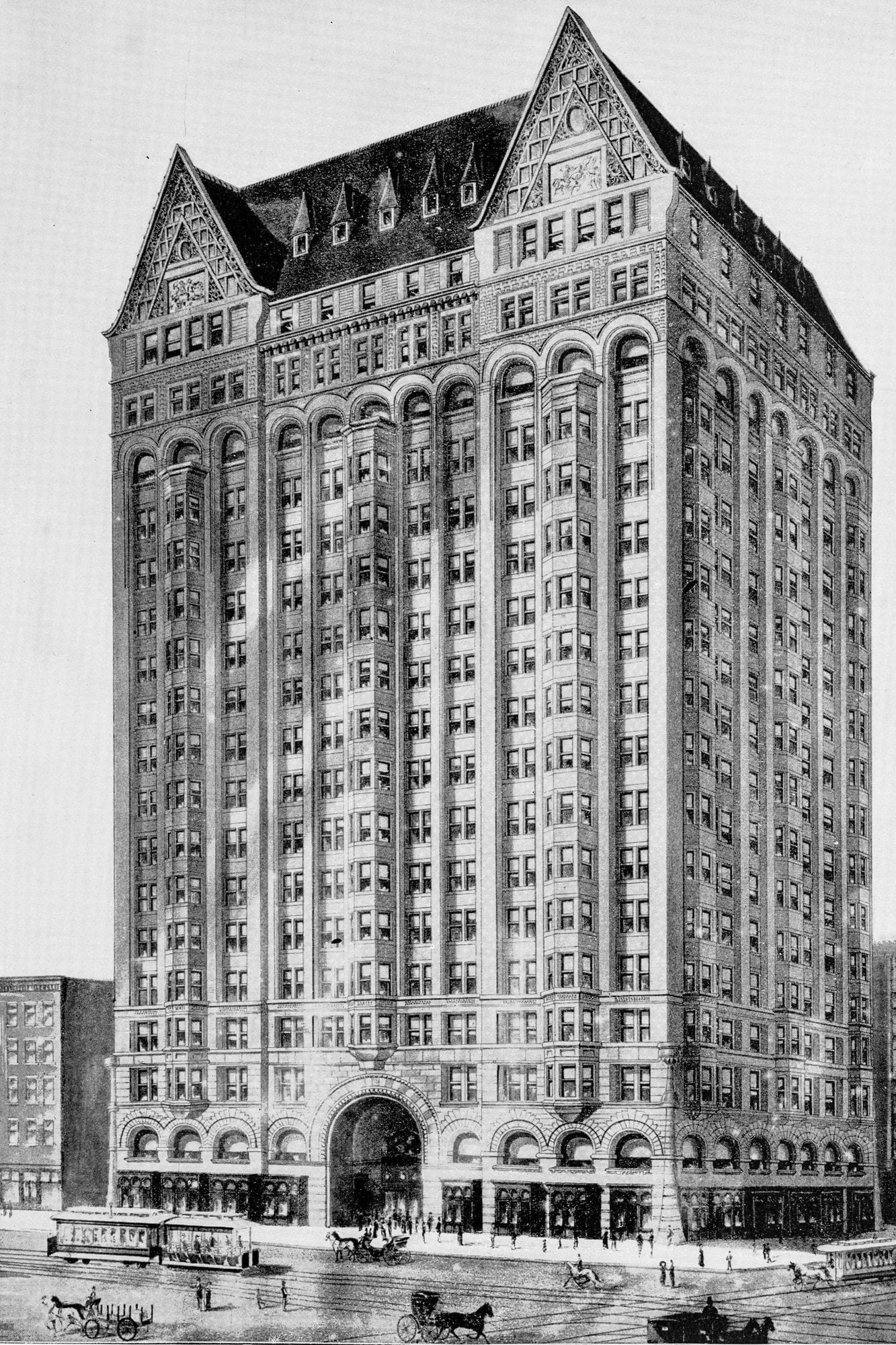
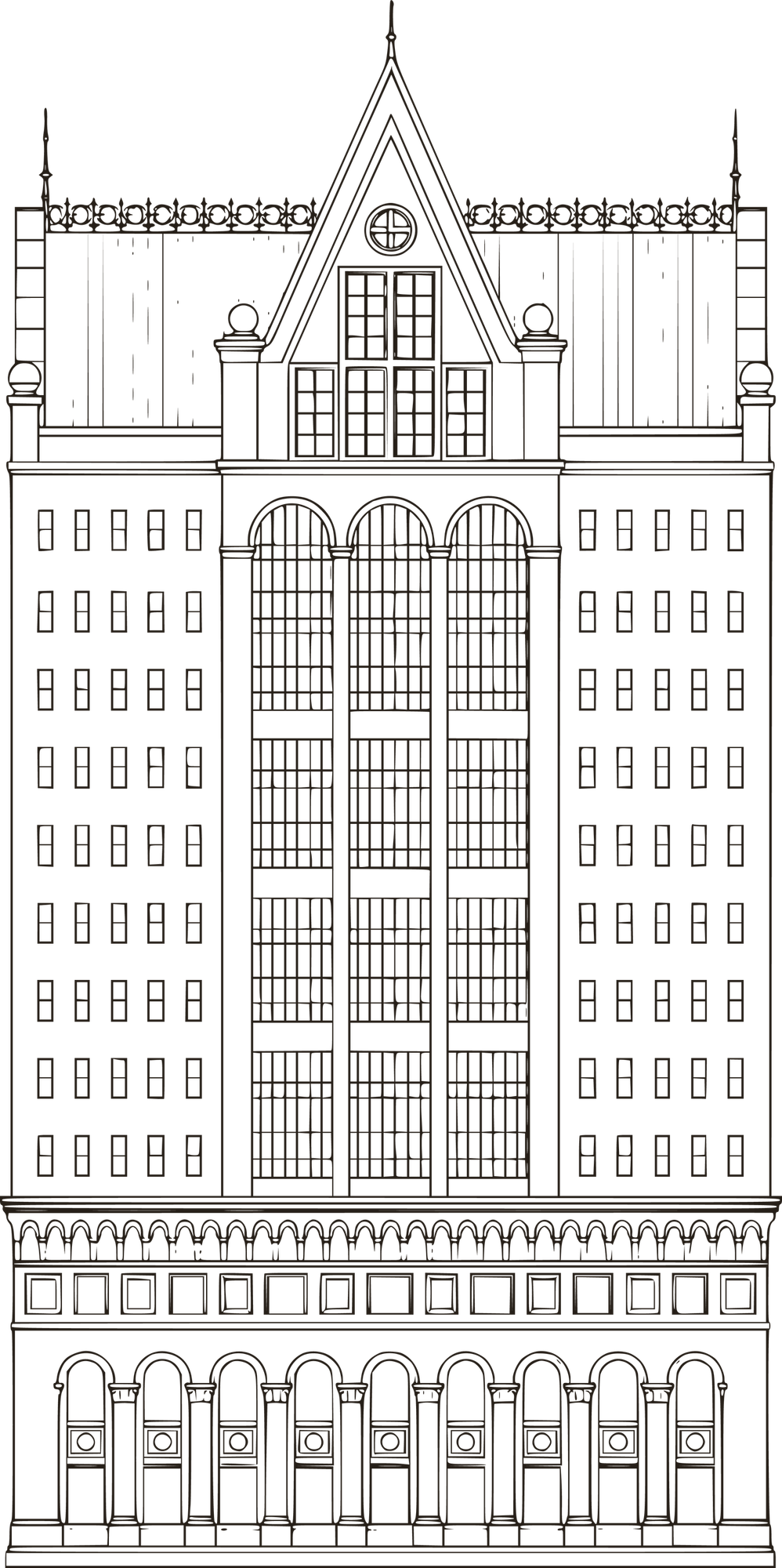
Two of them matter enormously to this address. Daniel Burnham and John Wellborn Root gave the Loop some of its most beloved landmarks, including the Rookery of 1888, which still stands kitty-corner from 190 South LaSalle in its dark red masonry. In 1892 they finished the Masonic Temple, twenty-two stories under a steep gabled roof, briefly the tallest building in the world. Chicagoans adored that roofline. Hold onto it. It comes back into this story ninety-five years later.
1893–1929
The Canyon of Commerce
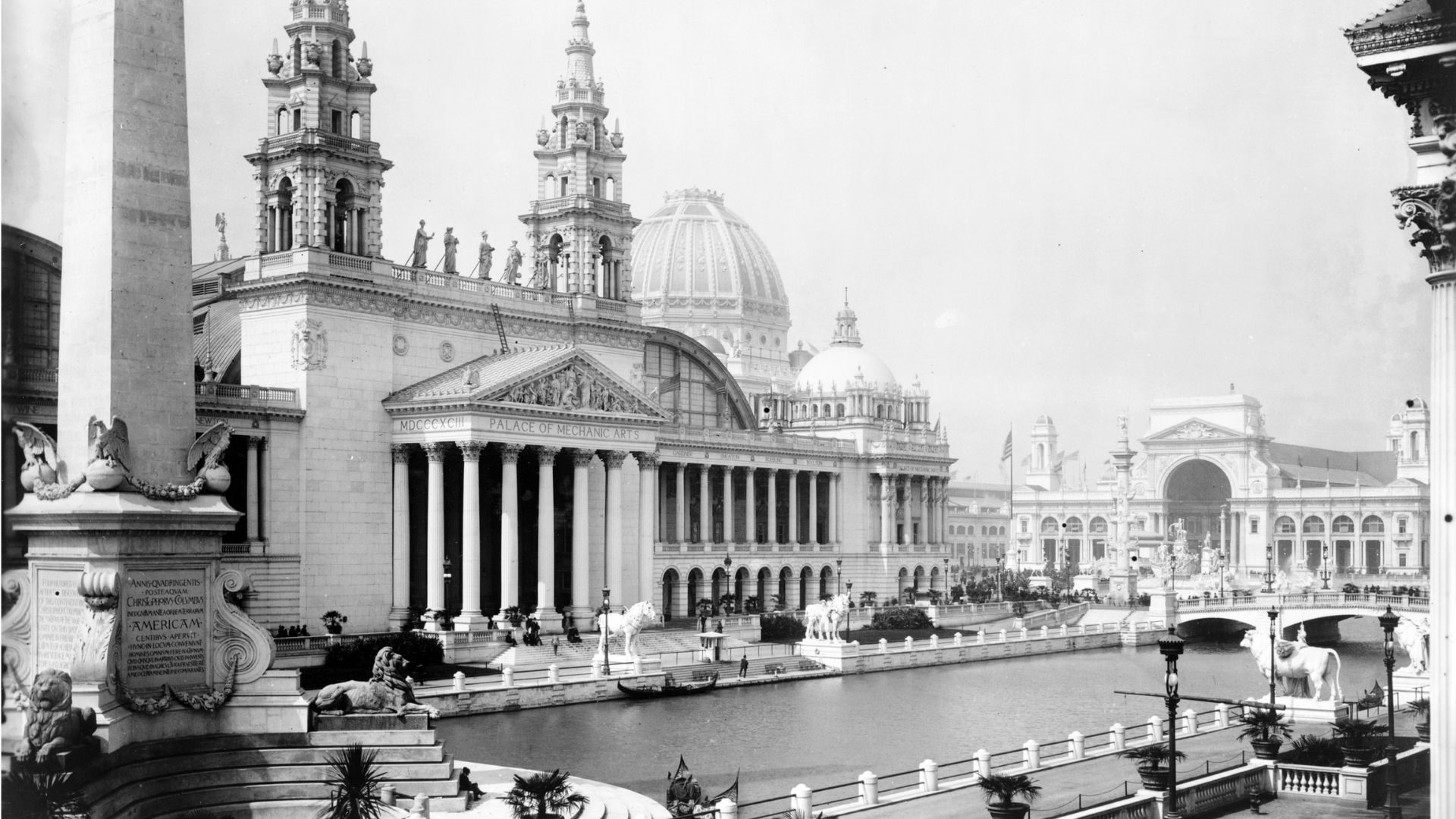
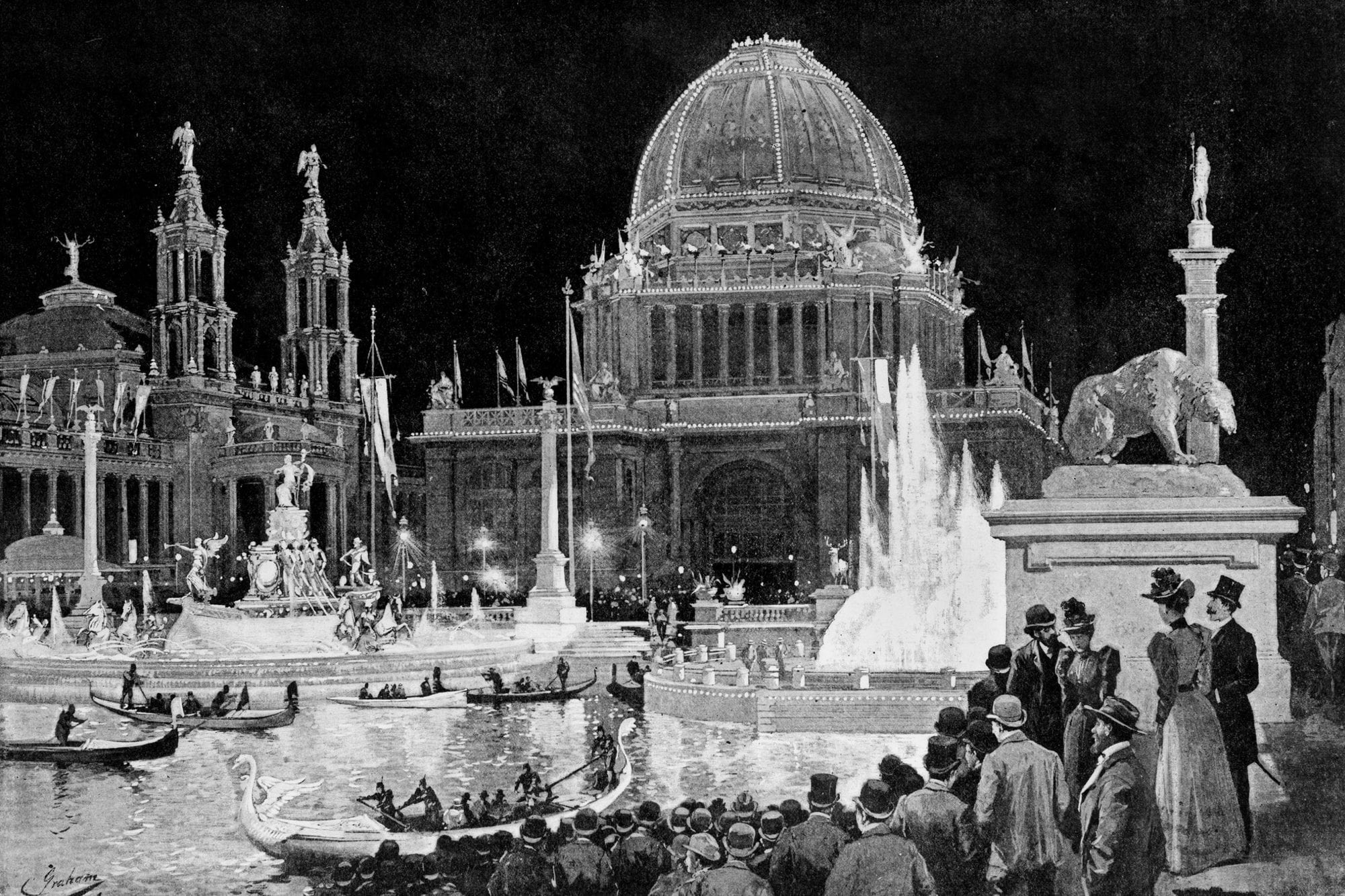
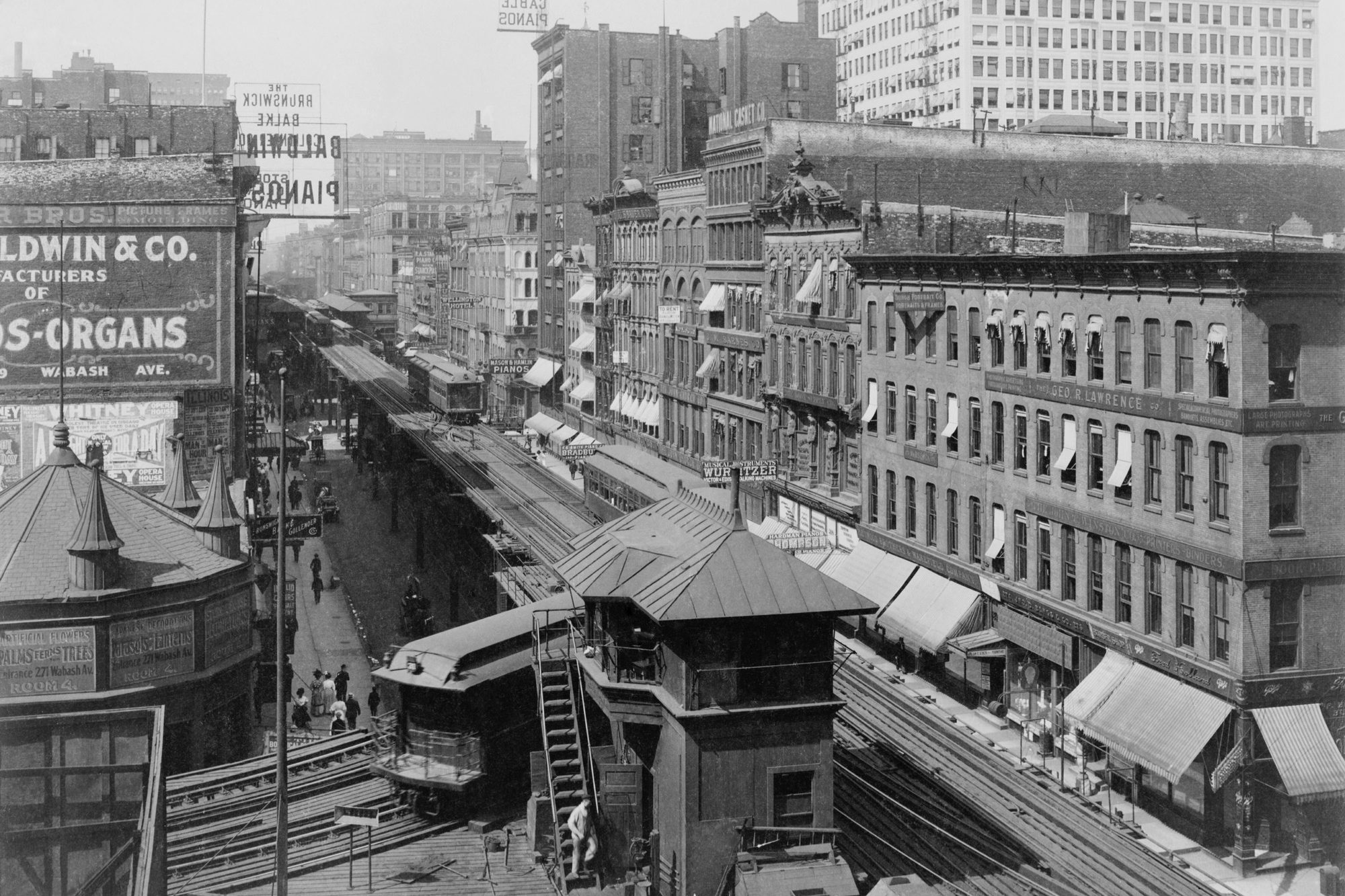
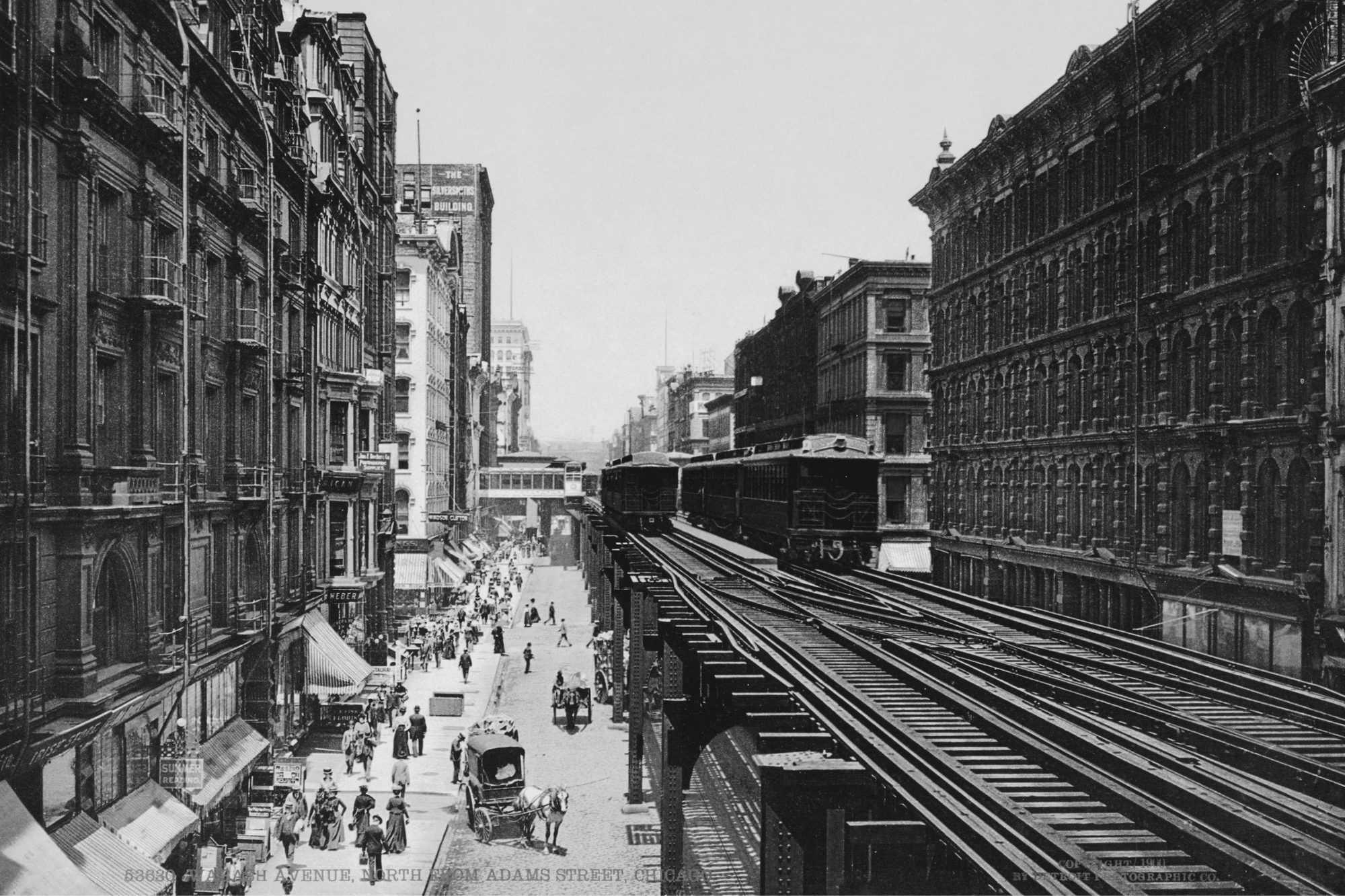
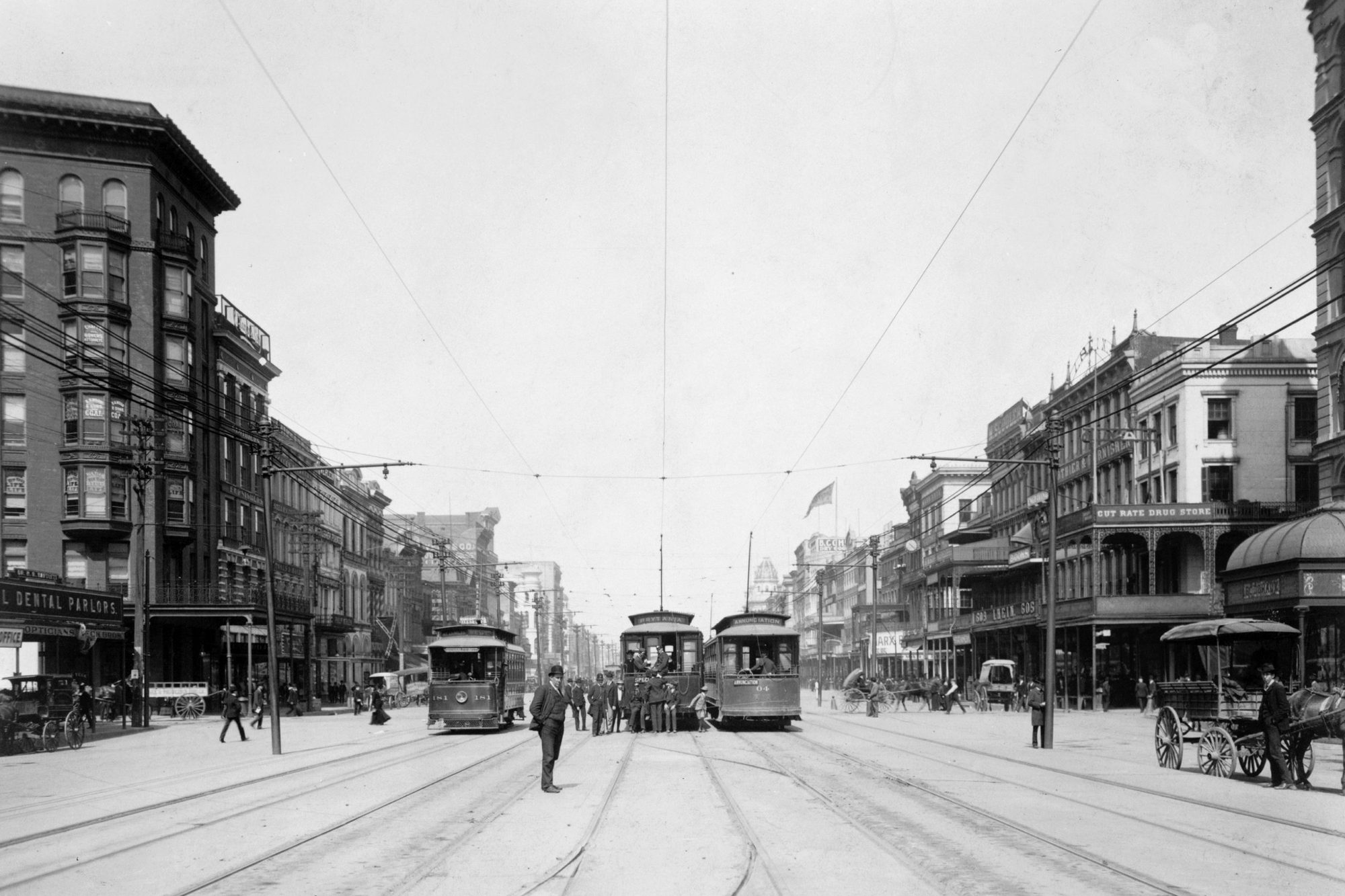
The World's Columbian Exposition of 1893 announced Chicago to the planet, and the decades that followed built the city's second skyline, the one you can still trace in old photographs: Tribune Tower's gothic crown, the Wrigley Building gleaming white over the river, the Jewelers' Building topped with its dome. Down on LaSalle, the transformation was less romantic and more consequential. Block by block, the street walled itself in with banks, exchanges, and law offices until it became a canyon in the literal sense, a slot of sky between cliffs of stone.
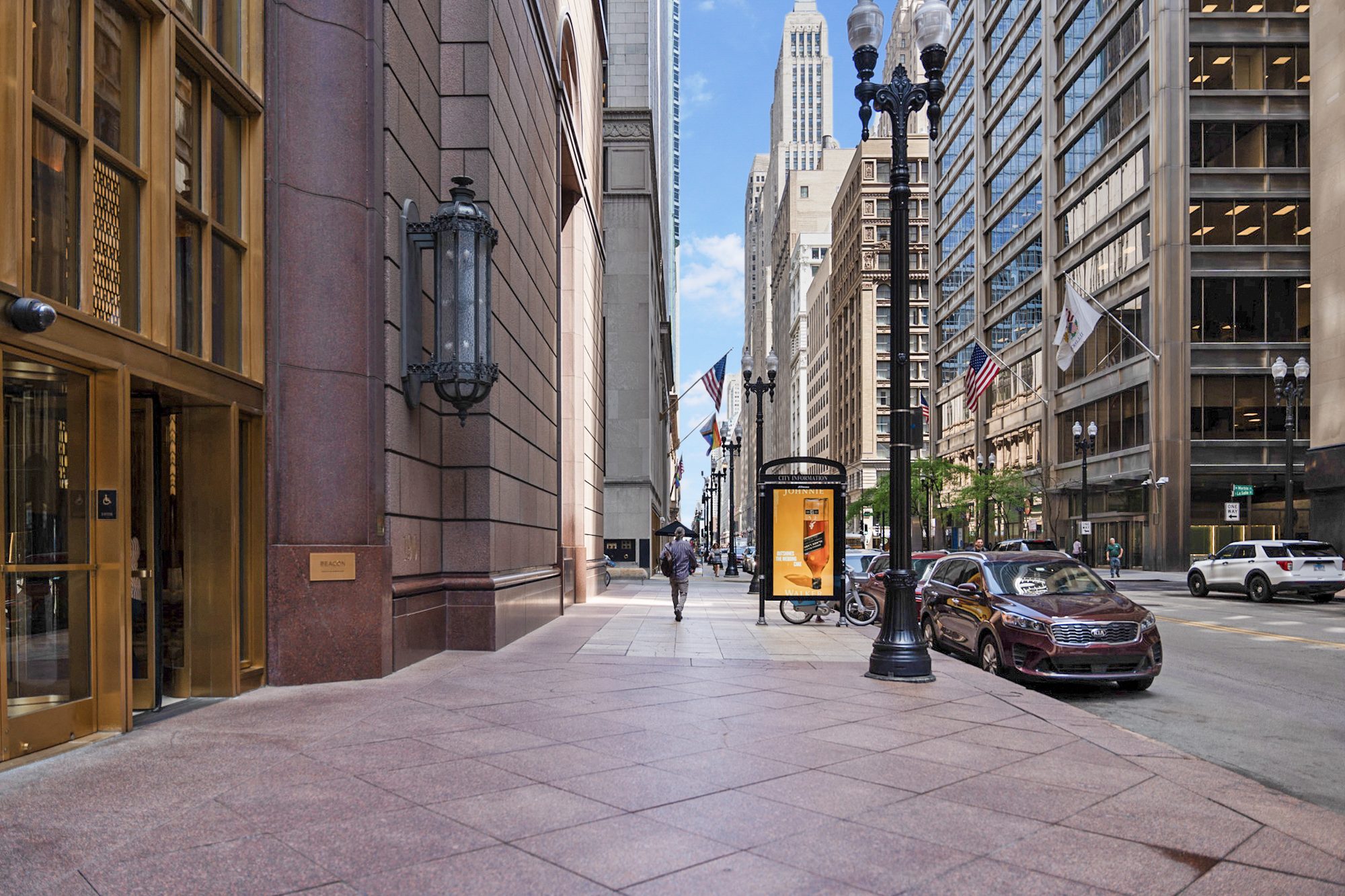
This was the financial heart of the Midwest, the place where harvests from a thousand miles of prairie were priced, insured, financed, and argued over. The corner of LaSalle and Adams sat in the thick of it. Fortunes moved through these blocks on paper and handshakes, and the buildings were designed to make that trust visible: heavy stone, tall bronze doors, lobbies meant to feel like the inside of a promise.
1930–1945
Depression, War, and the Wartime City
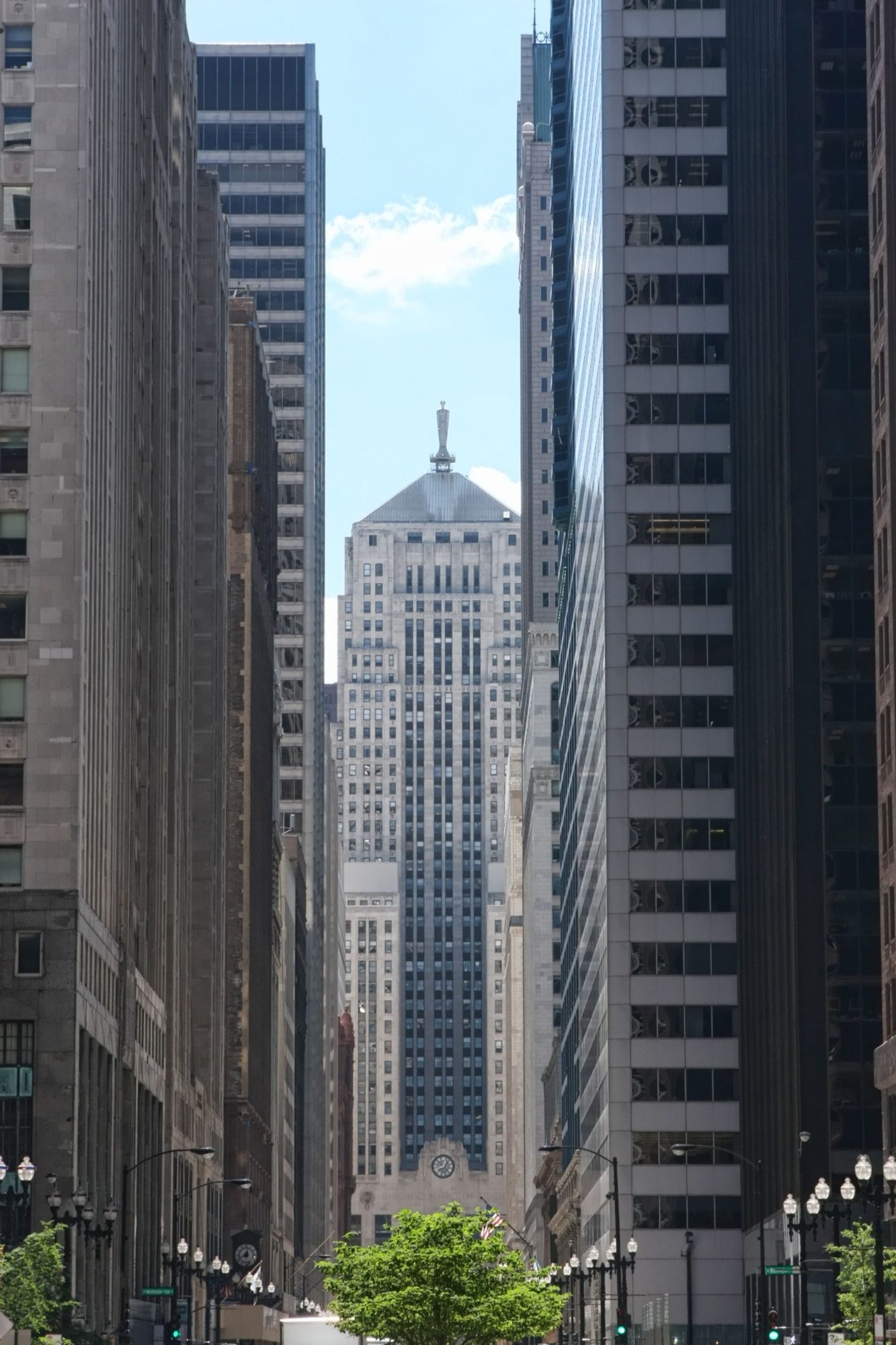
The Board of Trade's great Art Deco tower rose in 1930, capping the canyon's south end with Ceres, goddess of grain, just as the economy that built it cratered. The Depression hit Chicago hard, and LaSalle Street, the very symbol of American finance, absorbed a decade of doubt.
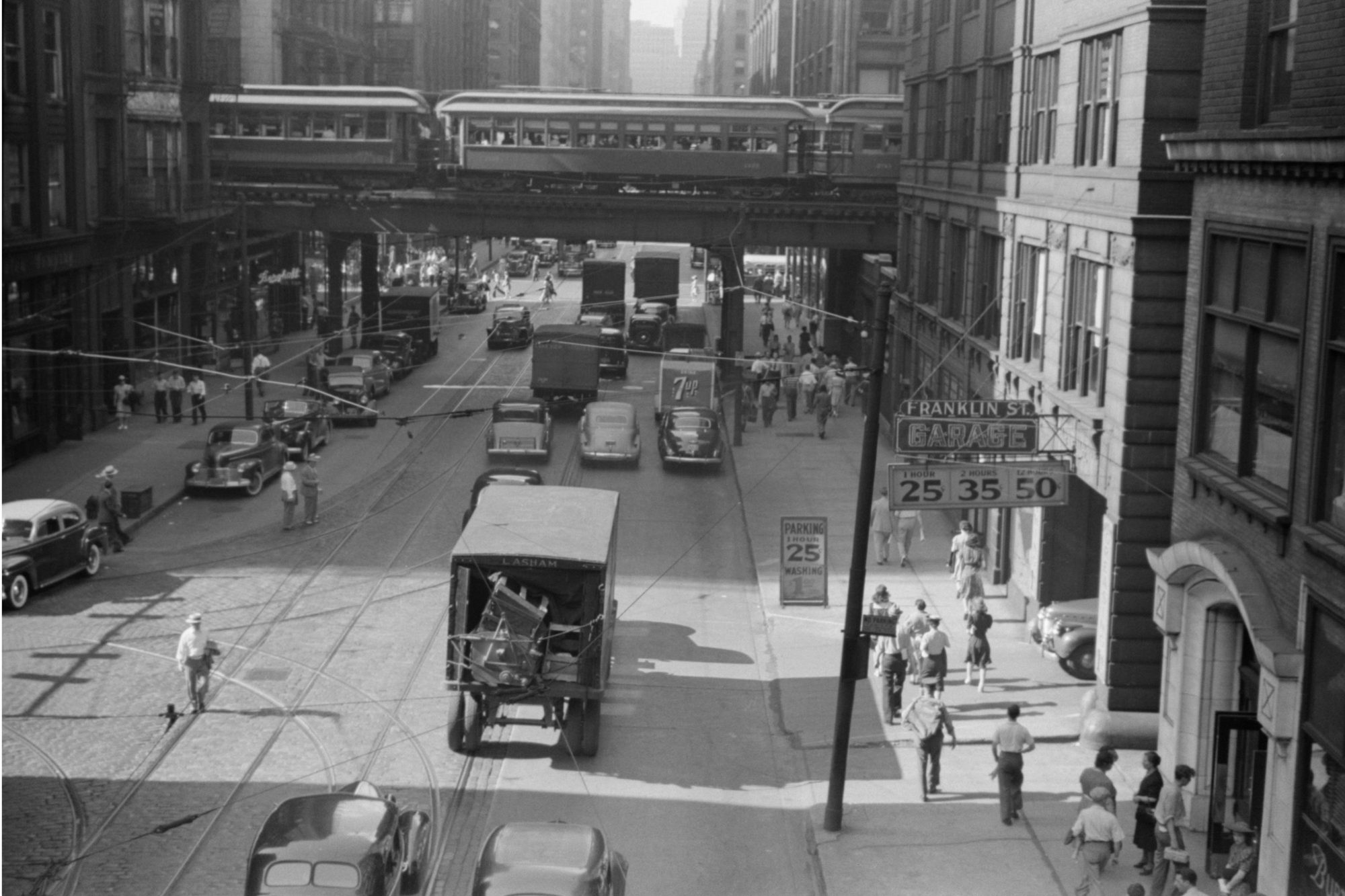
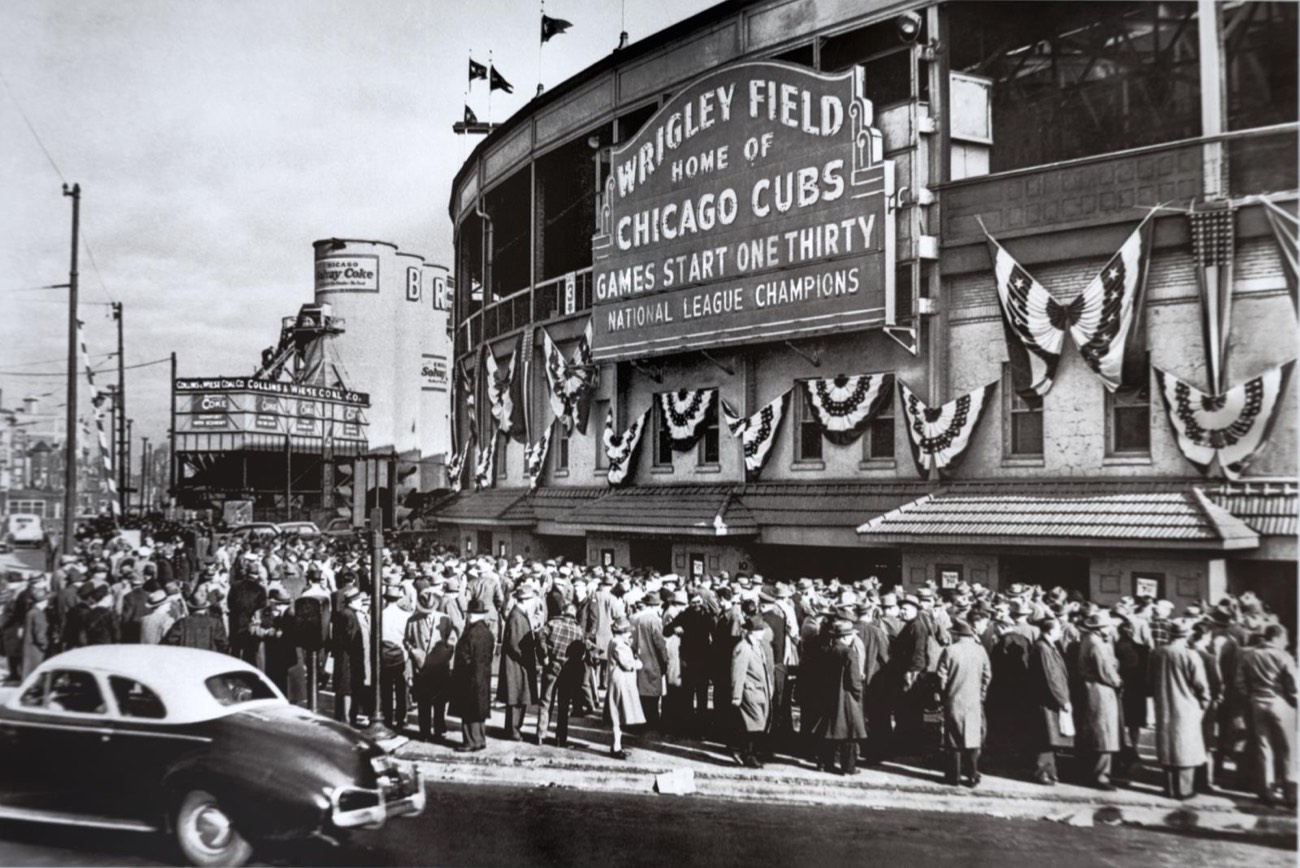
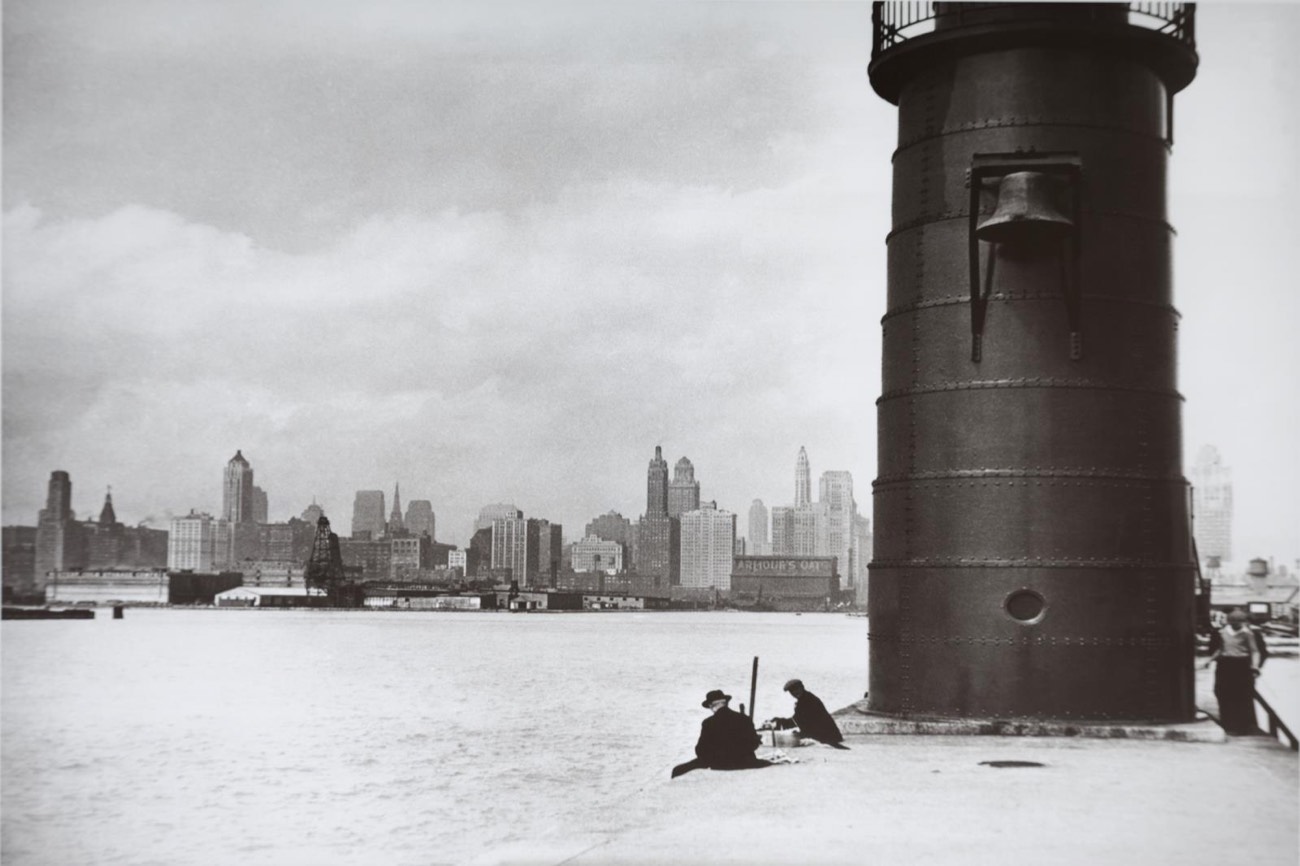
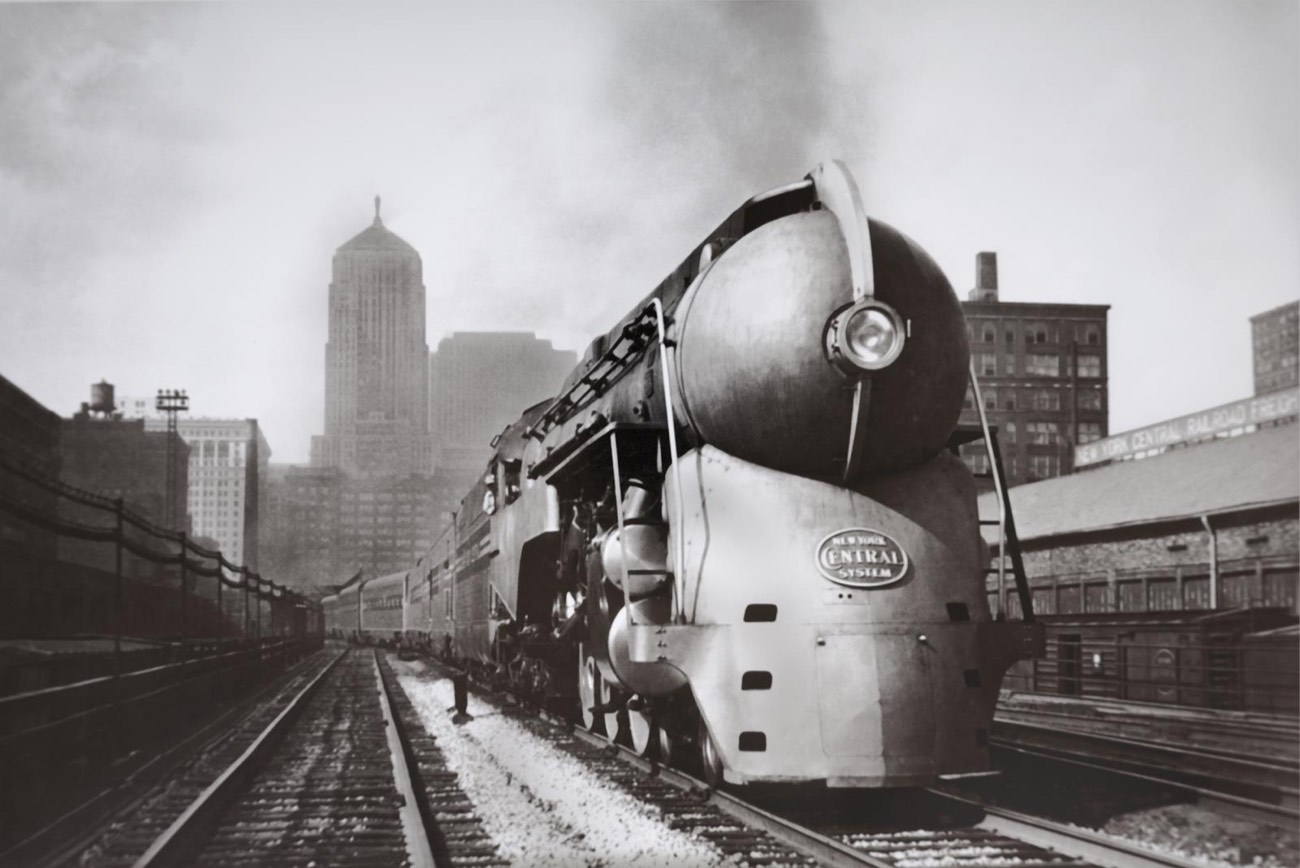
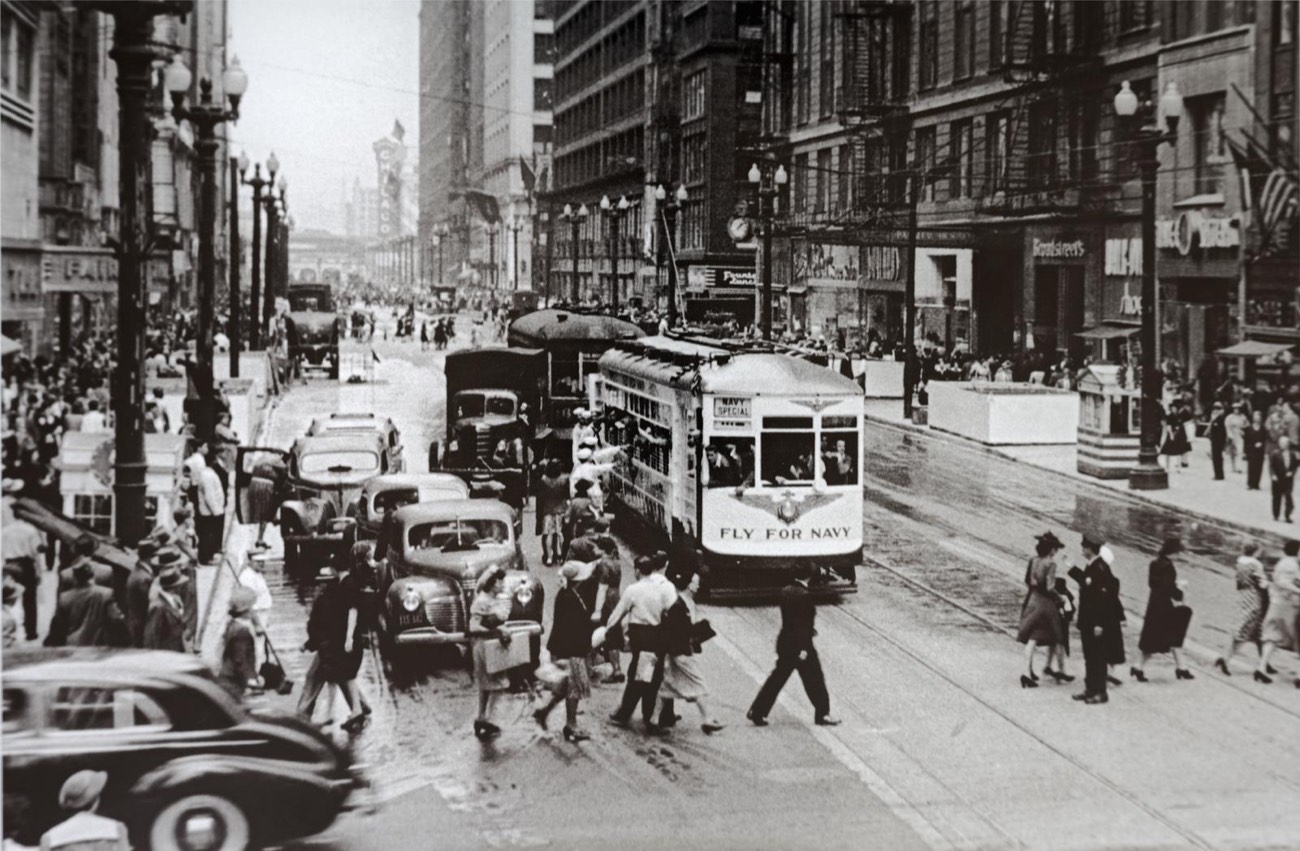
Then the war came, and the city roared back to work. The photographs from these years show a Chicago in full stride. Streetcars rolled down State Street wearing recruiting banners that read “Fly for Navy.” Streamlined locomotives slid through South Loop rail yards with the Board of Trade looming in the haze behind them. Men fished off the harbor lighthouse with the skyline stacked across the water. In the fall of 1945, crowds in overcoats pressed into Wrigley Field under a marquee reading “National League Champions”, the last pennant the Cubs would fly for seventy-one years. It was an era of noise, purpose, and motion, and downtown Chicago was its stage.
1946–1986
The Long Modern Afternoon
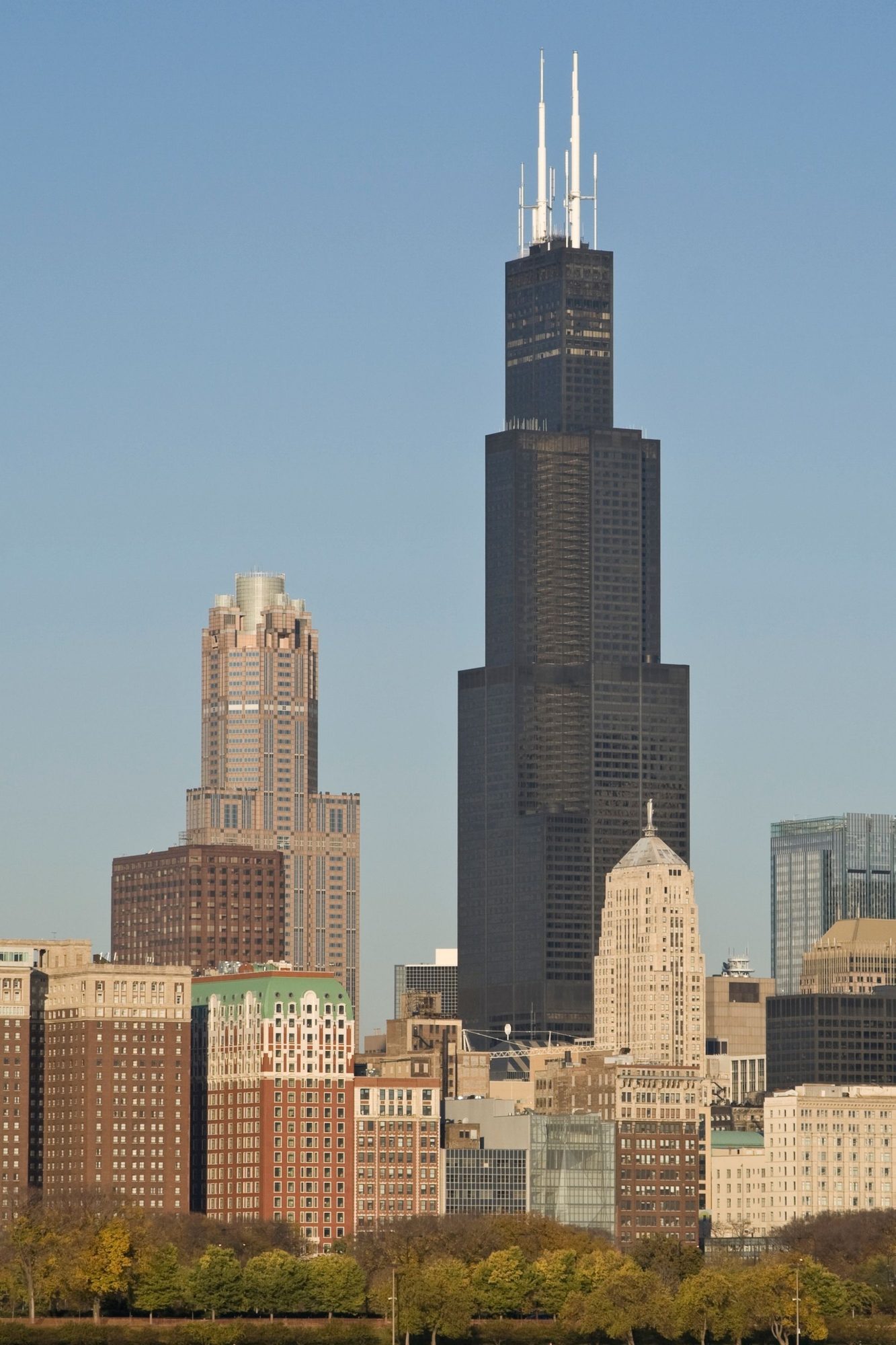
Postwar Chicago traded stone for steel and glass. Mies van der Rohe's towers made the city the world capital of modernism, and for forty years the new buildings got taller, cooler, and more abstract. The Loop's Victorian survivors thinned out; the beloved Masonic Temple had already come down in 1939, its gabled crown reduced to memory and photographs.
LaSalle Street held steadier than most. The banks stayed. The traders stayed. But by the 1980s something had shifted in architecture itself. A generation raised on glass boxes began asking what had been lost, and the answer, increasingly, was buildings like the ones Burnham and Root used to make: buildings with warmth, ornament, and a sense of belonging to their street. The corner of LaSalle and Adams was about to get exactly that.
1987
A Roofline Remembered
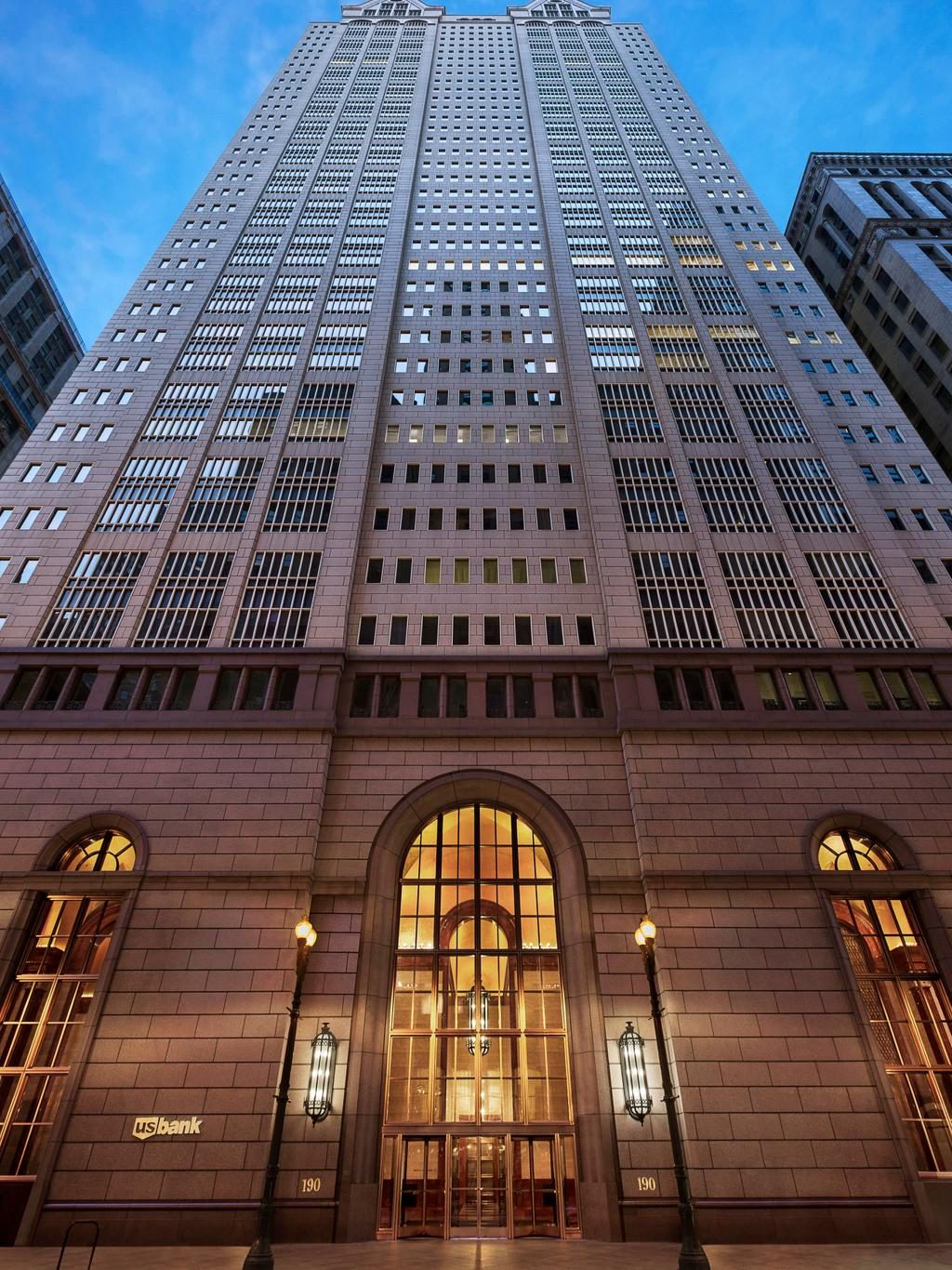
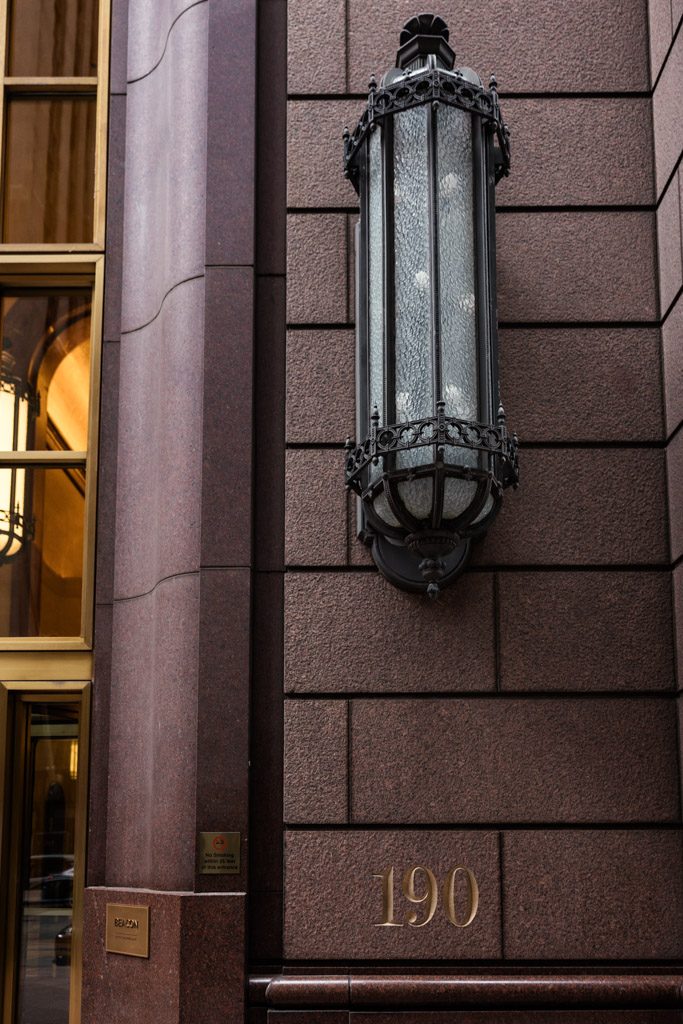
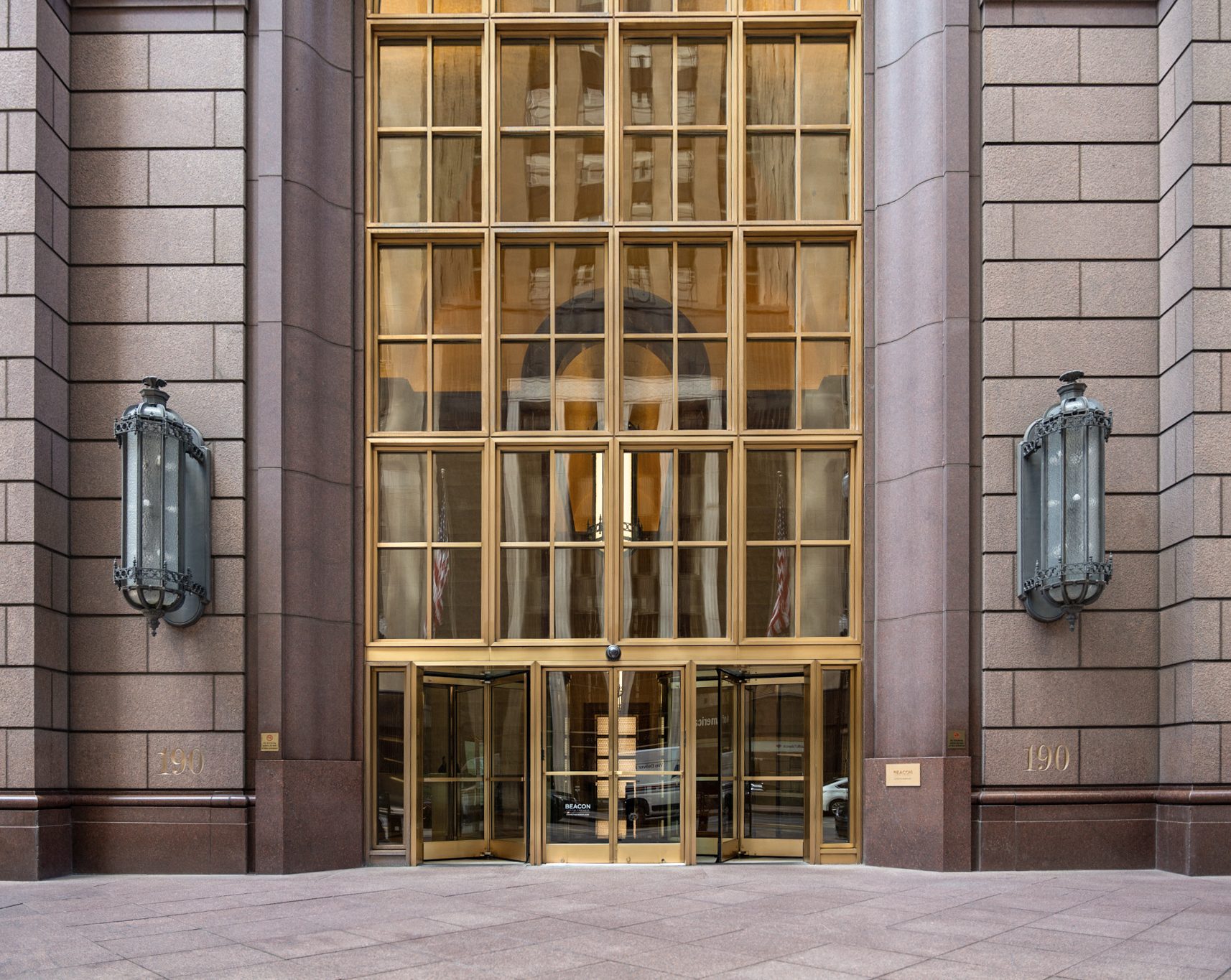
Philip Johnson had spent his early career championing the glass box. Then, famously, he changed his mind. Working with Chicago-born partner John Burgee, he spent the 1980s designing buildings that spoke to their neighbors and quoted the past on purpose. For the new tower at 190 South LaSalle, finished in 1987, Johnson and Burgee reached back to the building Chicago had loved and lost: their gabled crown reinterprets the roofline of Burnham and Root's 1892 Masonic Temple, raised here to forty stories and 573 feet. Even the reddish granite of the base is a nod across the intersection to the Rookery.
Inside, the gesture turns lavish. The lobby runs a five-story barrel vault sheathed in gold leaf, with marble underfoot and a monumental tapestry of early Chicago at the south entrance. It was postmodernism's argument in built form: a modern tower could carry a century of memory and still feel brand new. LaSalle Street, a hundred and sixteen years after the fire, had its history handed back to it.
Then · and now
The same street. The same crown.
The room you can stand in today.
1987–Today
The Library Years
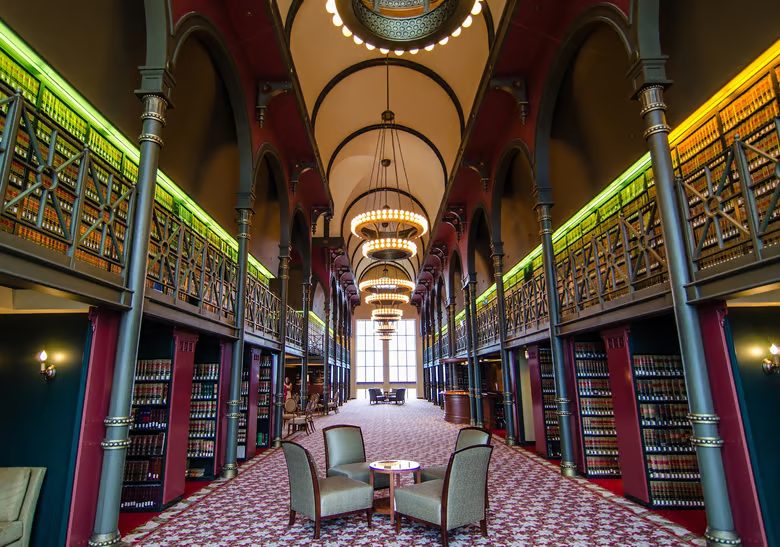
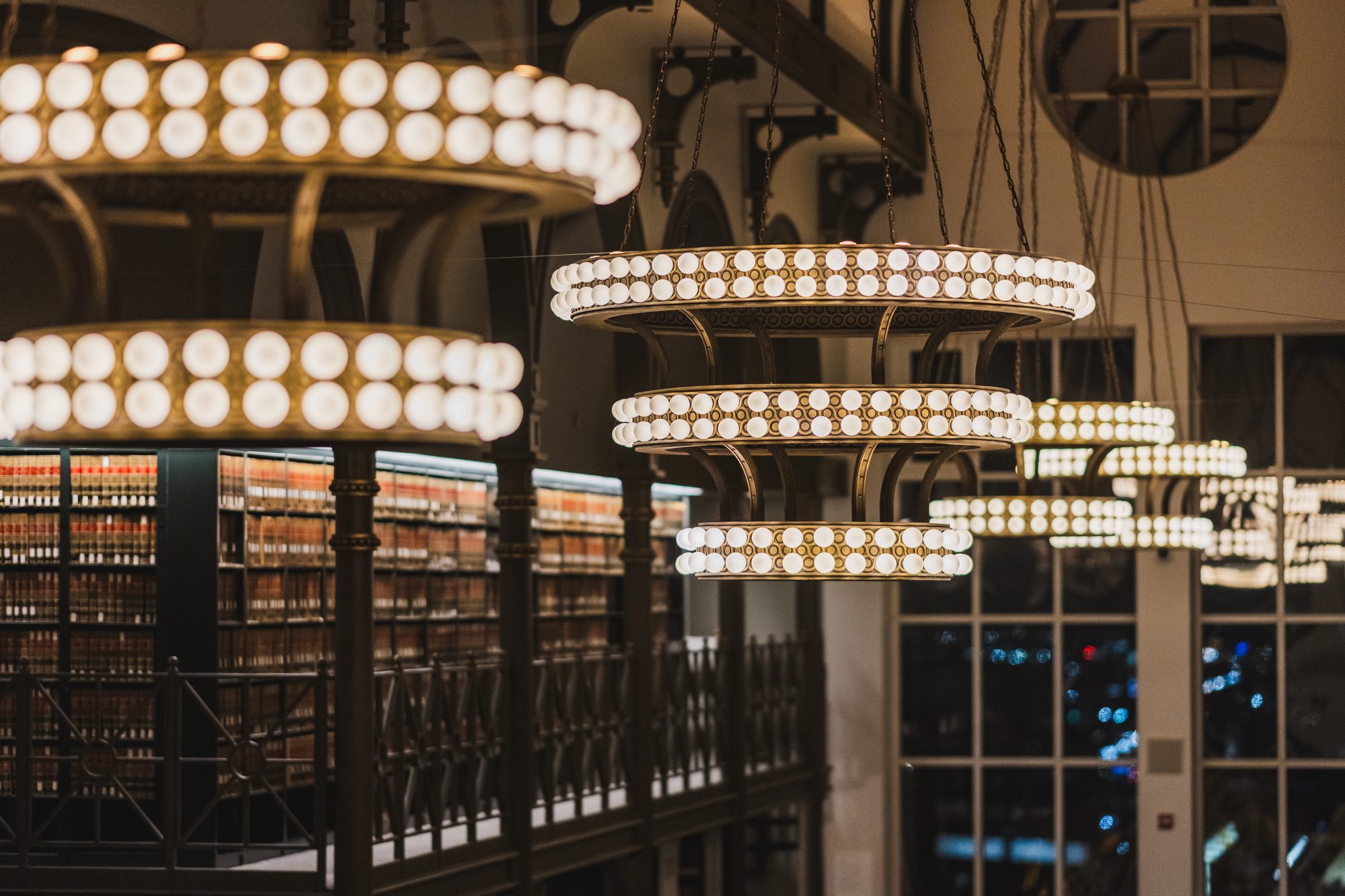
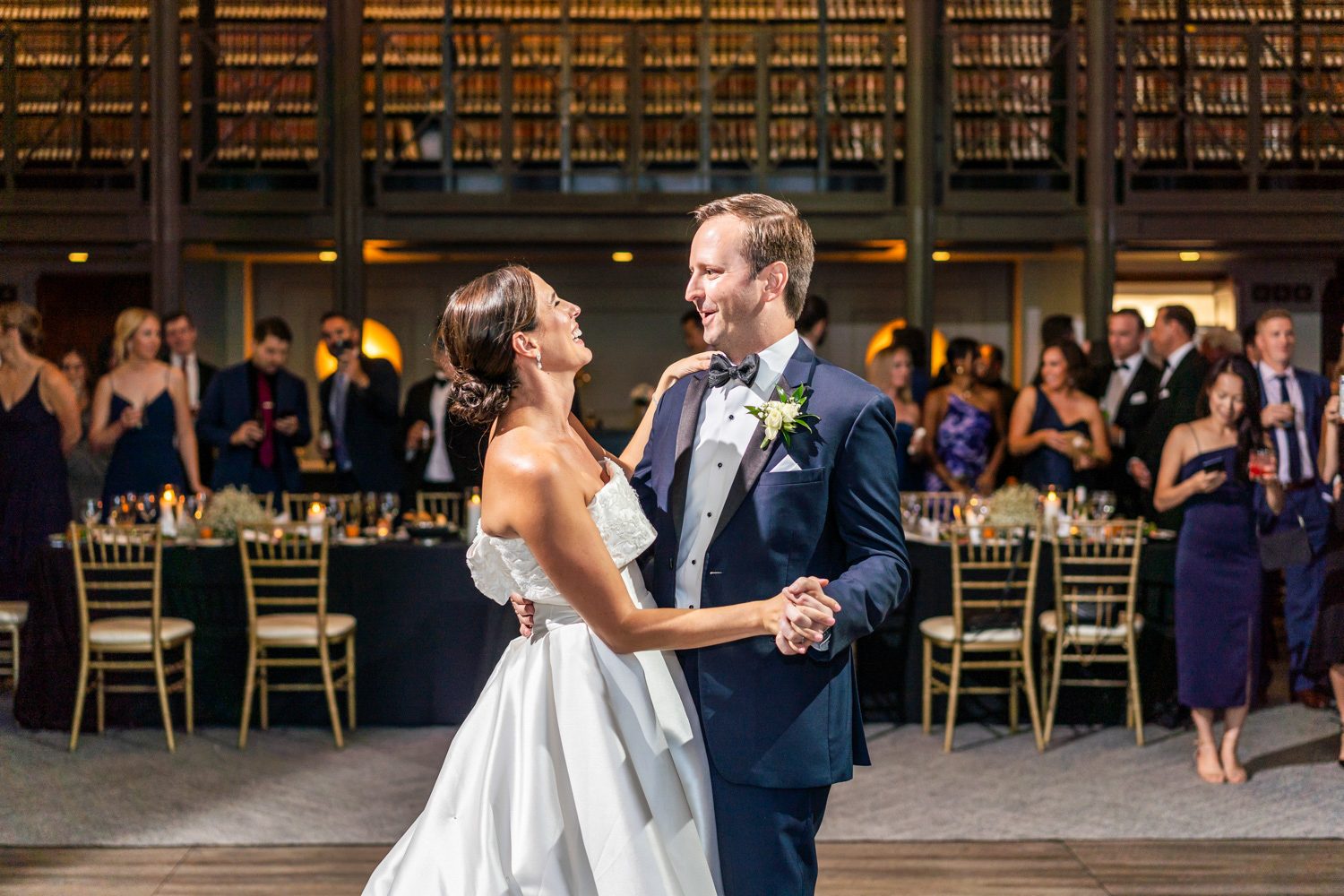
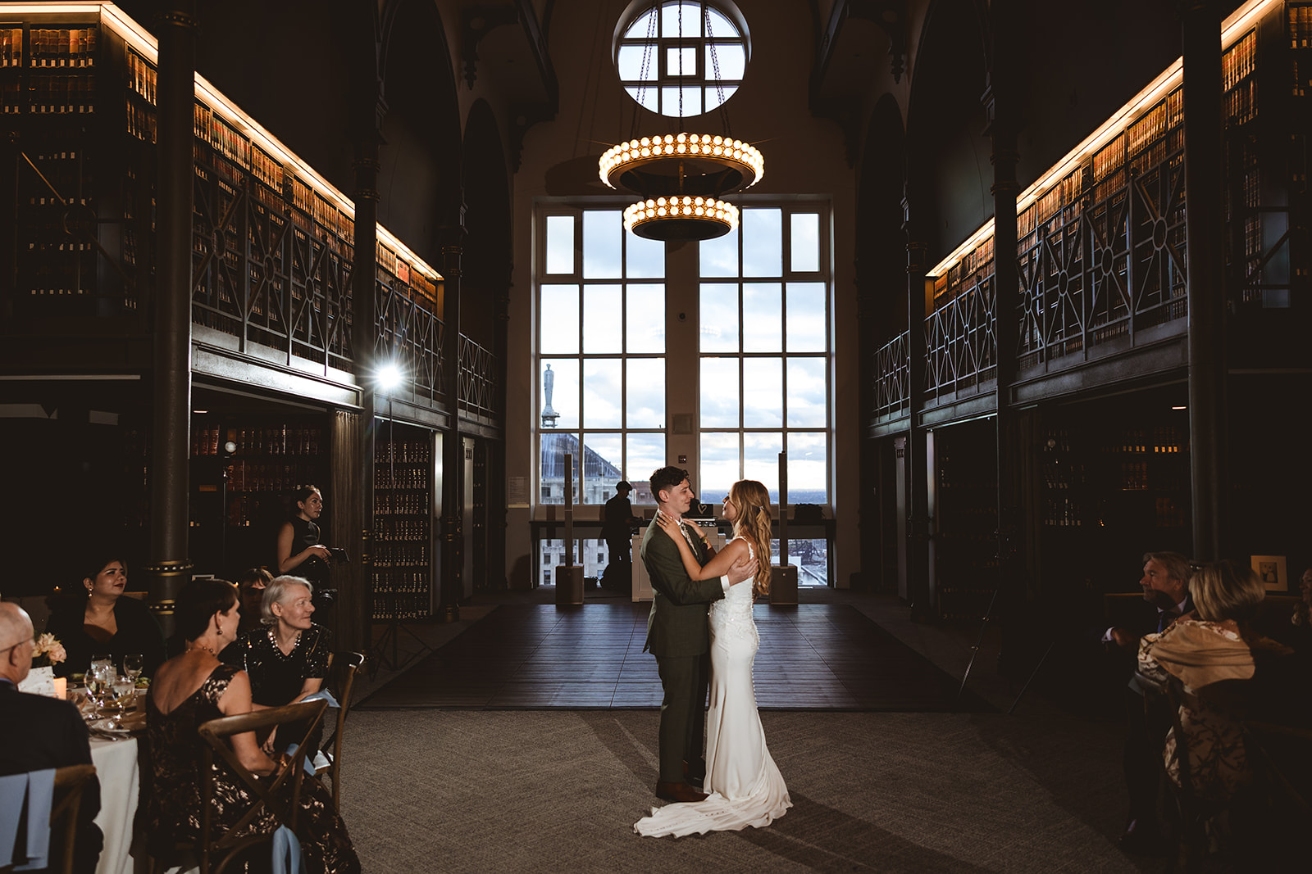
From the beginning, the top of 190 South LaSalle was set apart. The 40th floor, up under the gabled crown, became home to a working law library: two stories of book-lined mezzanines, iron-railed stacks, and a grand hall lit by an arched cathedral window with the whole city beyond it. For decades it was one of downtown's best-kept secrets, a room of chandeliers and ten thousand bound volumes floating above the financial canyon, seen mostly by attorneys who worked late.
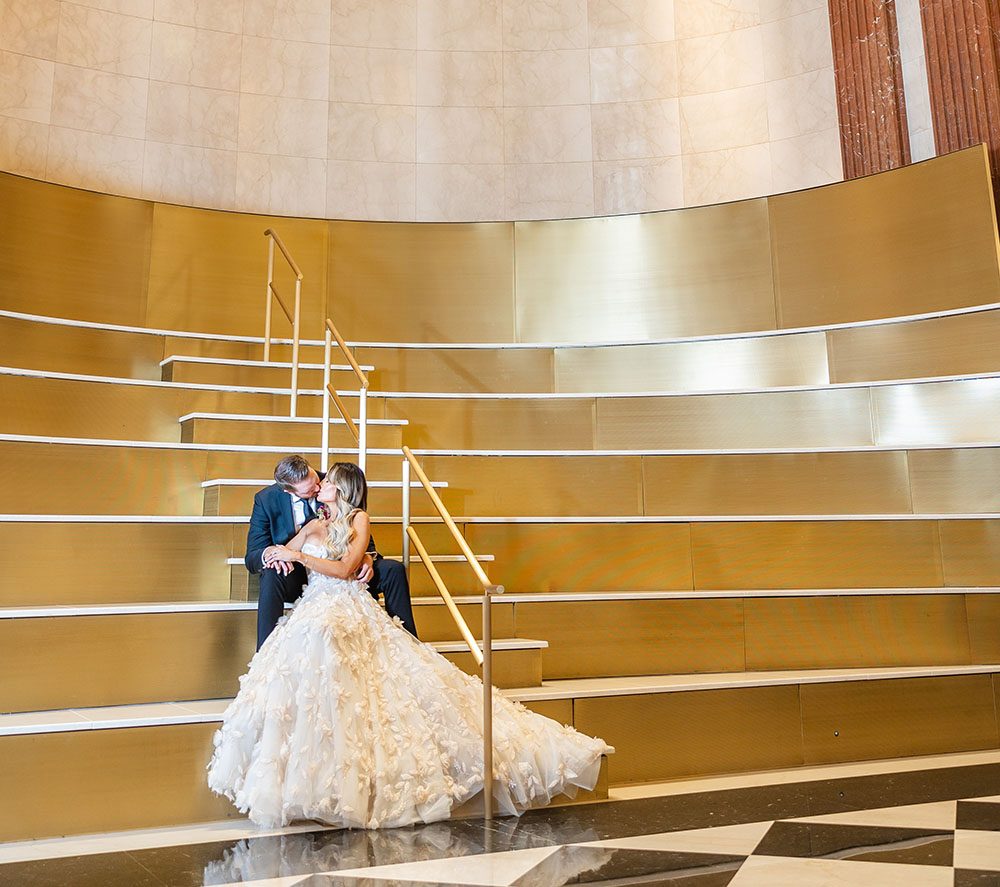
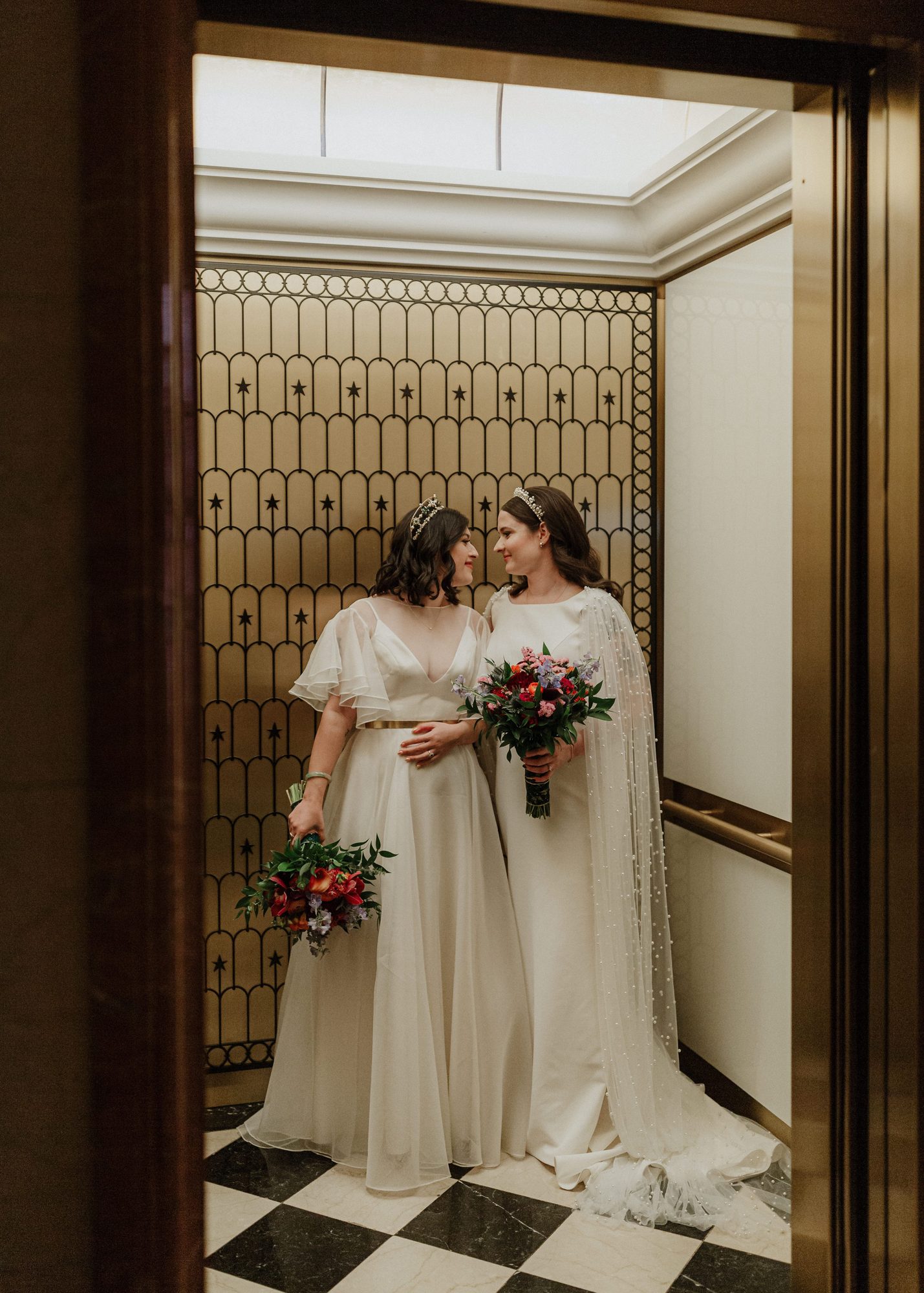
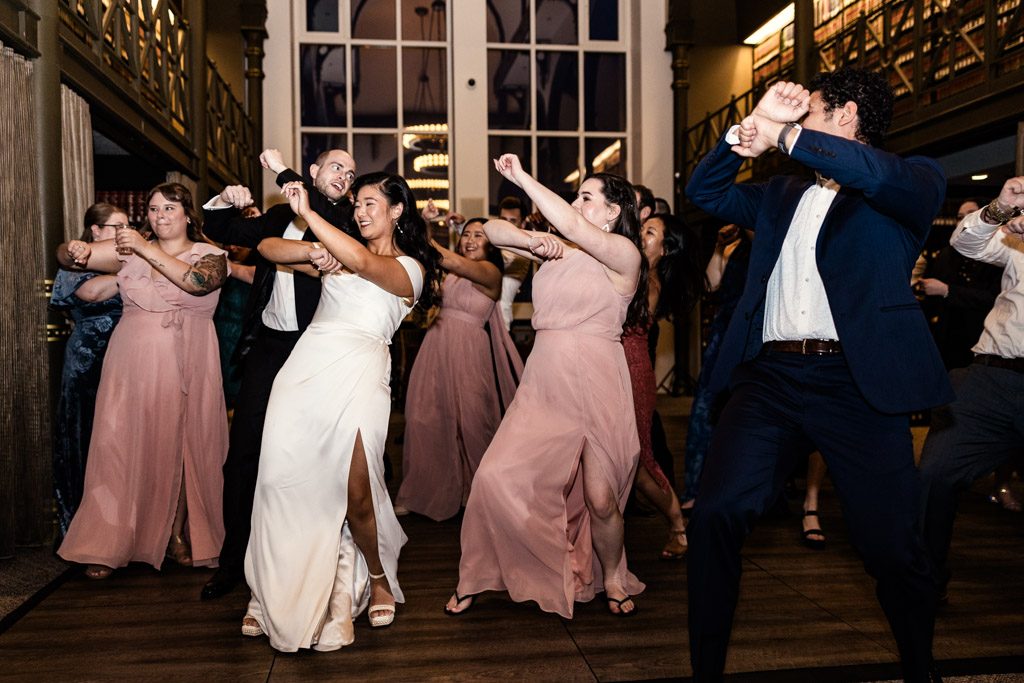
Today that room is The Library at 190. The books remain. So do the stacks, the brass elevator doors, the checkerboard marble, and the view. What changed is who gets to stand in it. Weddings come up the historic elevators now. First dances happen under the chandeliers. Toasts echo off shelves that once held case law, the room where a city kept its arguments has become a room where people make their promises.
A century and a half of Chicago is stacked beneath this floor. The next chapter is yours to write.
Write the next chapter
The next chapter gets written at your event.
Come stand in a hundred and fifty years of Chicago, and see the room in person.